
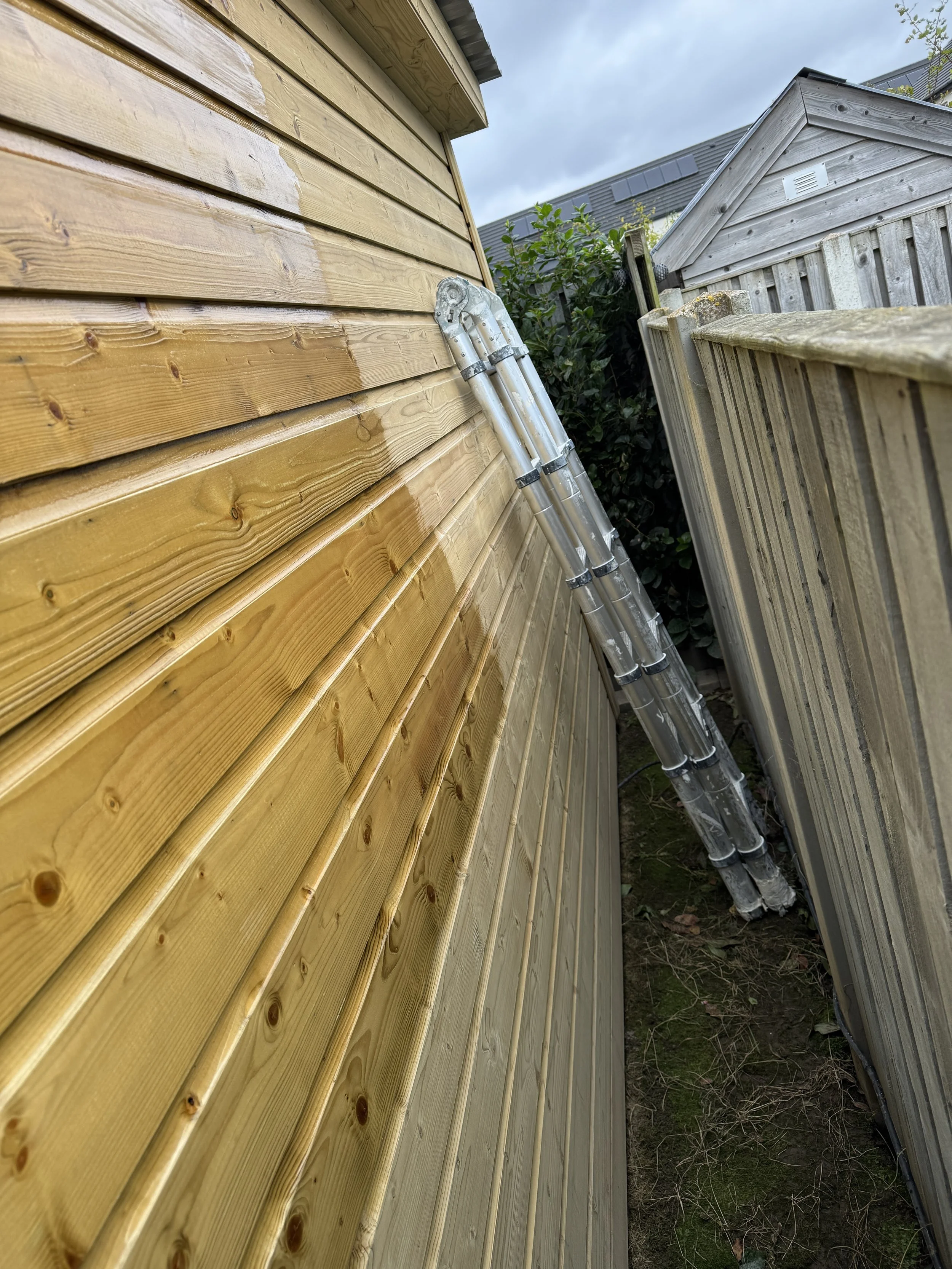
Varnish & Wood Stain: How to Protect Your Timber
Natural wood brings warmth, character, and luxury into any property. Whether it is a feature oak staircase, exposed timber beams, solid interior doors, or outdoor decking, real wood is a timeless material.
However, unlike painted surfaces, raw wood is porous and highly vulnerable. Left unprotected, it can dry out, crack, absorb moisture, warp, or lose its color due to UV light.
To preserve and highlight the natural beauty of timber, we use specialized wood stains and varnishes. But what is the difference, and which one does your woodwork need? Here is what you need to know:
1. Wood Stain: Enhancing the Grain and Color
A wood stain penetrates deep into the fibers of the timber rather than sitting on top.
What it does: It alters or enhances the natural color of the wood (for example, turning light pine into a rich walnut or oak tone) while allowing the natural grain pattern to show through clearly.
Best used for: Highlighting wood texture, changing wood tone, and protecting against UV fading.
Note: Stains provide color and light protection, but they usually require a clear topcoat (like varnish) over them for heavy wear areas.
2. Varnish: The Ultimate Protective Shield
Unlike stain, varnish forms a clear, hard protective layer on the surface of the wood.
What it does: It acts as a shield against scratches, water spills, household chemicals, and daily wear and tear. It comes in various sheen levels—from subtle matte and satin to high-gloss finishes.
Best used for: Wooden floors, kitchen worktops, handrails, doors, and tabletops that see high daily traffic and need waterproofing.
3. Preparation is Everything with Wood
You cannot simply brush new stain or varnish over old, peeling wood finish. For the timber to absorb the product evenly, proper preparation is non-negotiable:
Stripping & Sanding: We carefully sand down old layers of flaking varnish to reveal fresh, bare timber.
Dust Removal: Wood dust is ultra-fine. We thoroughly tack-cloth every surface because even a single speck of dust trapped under clear varnish will create a rough bump.
Layering & Light Sanding: Achieving a deep, glass-smooth finish often requires 2 to 3 coats, with very fine hand-sanding between each coat.
Final Thoughts
Restoring and protecting timber is a true art form that requires patience and precision. Whether you want to refresh aged wooden features or protect brand-new timber installations, choosing the right stain and varnish combination ensures your wood stays stunning for years to come.